
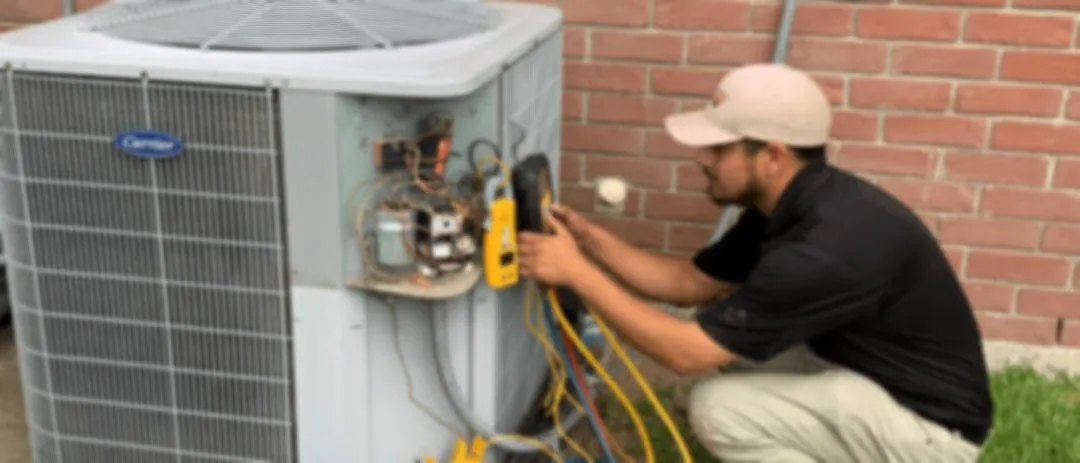
A furnace startup smell can be unsettling when heat comes on after a long break.
Do not assume the odor is harmless just because it is the first heating cycle of the season in your Katy home.
The first decision is whether you need to leave at once, stop routine use, or arrange expert review.
This guide explains those boundaries without asking you to inspect burners, open a furnace, or keep equipment running to test a smell.
Put emergency signs ahead of the checklist
If you smell gas, leave the home at once.
Do not touch switches, use a phone inside, or investigate the furnace.
From a safe outdoor location, contact emergency services or your gas utility's emergency line and follow their directions.
A carbon monoxide alarm also means leave at once and call emergency help from outside.
The Consumer Product Safety Commission's carbon monoxide guidance explains the need to get to fresh air and call 911 when carbon monoxide poisoning is suspected.
Do not rely on your sense of smell to rule it out.
Smoke, flames outside normal enclosed equipment use, or signs of fire need evacuation and emergency help.
Do not stay to photo the furnace or gather a service history.
Getting everyone to safety takes priority.
Wait for emergency responders to say reentry is safe.
A smell fading while you stand outside is not clearance to return.
Routine HVAC service comes after the immediate hazard has been addressed.
Understand why a first-use odor is not a diagnosis
A furnace startup smell may come from dust heating on parts after a period without use.
Carrier's furnace odor guidance describes that possibility and distinguishes it from lasting or electrical-burning odors that need attention.
That explanation does not allow you to identify an unknown smell with certainty.
A homeowner cannot safely confirm the source by opening the furnace or waiting for the odor to become stronger.
Do not use a fixed waiting period as a safety rule.
The odor's character, other warning signs, and your uncertainty all matter.
If the smell is lasting, unusual, or difficult to identify, stop routine use when safe and seek expert guidance.
A plastic-like or electrical burning odor deserves prompt attention.
If there are no gas or fire signs and it is safe to do so, use the normal thermostat control to stop heating.
Do not approach equipment that is smoking, sparking, wet, or otherwise unsafe.
Record only what you noticed from a safe place
Once immediate hazards have been ruled out by the suitable responders when needed, a short record can help with a service request.
You do not need to repeat the smell.
Write down these details from memory or safe note:
- Whether it was the first heating use after a long break.
- The room where the smell was first noticed.
- Whether it seemed dusty, electrical, plastic-like, or unfamiliar.
- Whether the odor became stronger or returned during normal use.
- Any unusual sound, smoke, alarm, or loss of heat.
- Whether heating is now off and who advised that action.
Keep the wording factual. Saying the odor seemed strongest at a bedroom vent is useful.
Saying a clear furnace part is burning adds a claim that the note cannot prove.
For a non-emergency heating concern, Katy Plumbing's heating repair service is a suitable next step.
Explain the odor and any accompanying symptoms before the appointment.
Avoid common attempts to prove the smell is normal
Do not raise the thermostat again and again to force another cycle.
Do not remove the front panel to look for dust.
Do not clean burners, touch wiring, or try to relight equipment as part of an odor investigation.
Changing a filter does not prove that the source of a furnace startup smell has been corrected.
A filter may be due for routine replacement, but that task should not become a reason to keep running equipment with an ongoing odor.
Avoid fragrance sprays or scented products near vents. They can obscure the description you need to share.
Do not spray cleaners into the system or place anything inside a grille.
If a breaker trips, do not reset it again and again to restore heat. Record the event and get help.
Again and again trying to restart equipment changes the situation without proving why it stopped.
Prepare for the heating discussion
Gather the model details from an existing manual, invoice, or safe exterior label.
If that needs opening a panel or entering an unsafe space, skip it.
The absence of a model number should not delay reporting the concern.
Note recent changes in the home. Was work performed near a return grille? Were boxes moved into a mechanical space?
Was a filter changed?
These details may help the review, but none proves the cause.
Ask what needs to be checked before the system is used again.
If someone gives an instruction you do not understand, ask for a plain explanation.
Do not improvise an equipment procedure from a partial description.
Keep emergency and routine contact details distinct. A gas odor or alarm belongs with emergency help first.
A normal service appointment is not a substitute for that response, even if a technician has already been contacted.
Plan the next normal heating start
After the concern has been checked and the system is cleared for use, keep any care instructions with the equipment records.
Write down what was found and which homeowner tasks are suitable for that system.
Review the household's alarm instructions and emergency plan on its own from the heating controls.
Everyone should know that a carbon monoxide alarm is not something to silence and ignore.
Follow the alarm maker's testing and replacement guidance.
If a similar odor returns, describe it as a new event with a date and context.
Do not assume an earlier explanation applies forever.
Changes in smell or accompanying symptoms deserve a fresh discussion.
For help with an ongoing furnace startup smell in Katy, contact Katy Plumbing after any immediate emergency has been handled.
Share the odor description and safe notes, and keep equipment closed while expert review is arranged.