
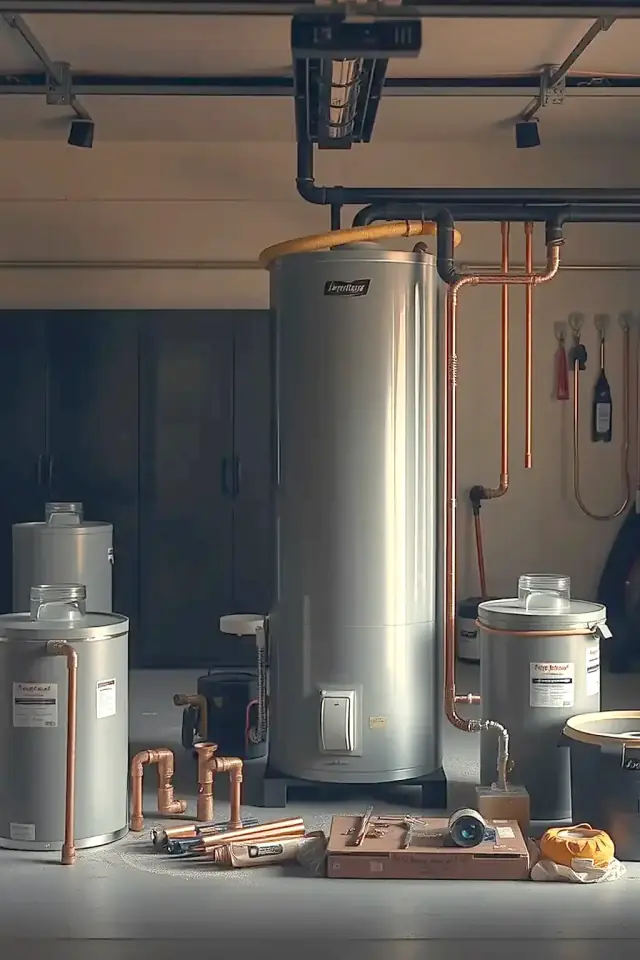
Water heater popping sounds can interrupt a quiet evening and leave you wondering whether the tank needs attention.
Before trying a repair, note when the sound happens and whether your hot water has changed.
For a Katy homeowner, a useful first step is a short sound record.
You can collect helpful details without touching hot pipes, lifting covers, or running the heater through repeated tests.
This guide explains what to observe and when to stop.
What a popping sound can tell you
A. O. Smith explains that sediment can contribute to popping inside a tank.
Water and steam can move through deposits as the heater operates.
That is one possible explanation, not proof that every noisy heater has the same problem.
A recording cannot show what is happening inside the tank.
The sound may also travel through pipes, making its source seem closer than it is.
Avoid deciding that a flush or a particular replacement part is needed before someone checks the equipment.
Think of the noise as a clue with three parts: where you hear it, when it starts, and what else changes.
Those details are more useful than describing every sound as a bang.
Record the sound during normal household use
Stay in a dry, clear area with an easy path out.
If the heater is in a hard-to-reach attic or crowded closet, do not climb or move equipment to get closer.
A recording from a safe doorway is enough.
- Note whether the sound follows a shower, laundry cycle, or other normal hot-water use.
- Describe the sound in plain terms: isolated pop, low rumble, rapid clicking, or pipe knock.
- Write down whether it begins during use or continues after the faucet closes.
- Record whether the same sound occurs at other times without an obvious trigger.
- Mention any recent service or change in household hot-water use.
Do not tap the tank or pipes to reproduce the sound.
Avoid placing your phone on the heater, its controls, or a nearby wet surface.
The purpose is to capture normal behavior, not provoke a response.
Separate a heater sound from a pipe sound
A pop that seems to come from the tank during heating is a different report from a knock heard when a faucet shuts.
You do not need to name the fault. Simply describe the event that happened immediately before the sound.
For example, a useful note might read: “I heard three pops from the garage after the evening shower.”
Another might read: “The wall beside the laundry room knocks when the washer stops filling.”
These are sample observations, not descriptions of actual Katy Plumbing jobs.
Ask another household member what they noticed during normal use. If their account differs, keep both descriptions.
Sound can travel, and different rooms may make the same event seem louder or softer.
When the sound repeats, schedule a water heater repair assessment and share the pattern.
A clear description helps direct the inspection without locking it into a guessed cause.
Look for changes that matter more than loudness
A new sound deserves attention even if it is not especially loud.
Note whether showers turn cool sooner, water temperature changes unexpectedly, or the heater display shows a message.
Describe each change separately rather than assuming the noise caused everything else.
From a safe position, look for water on the floor or visible staining around the equipment.
Do not touch damp wiring, remove an access cover, or reach behind the heater.
If the area is wet or unsafe, stop using it and seek help.
Gas odor, smoke, or a carbon monoxide alarm changes the situation.
Leave the building and call emergency services or the gas utility from safety.
Do not stay to make a recording or operate switches.
The CPSC notes that carbon monoxide has no smell, so the absence of an odor does not settle an alarm concern.
Why a recording is better than a guessed repair
Online advice often jumps from “popping” straight to a maintenance task.
That skips the heater type, its condition, the actual source of the noise, and any other symptoms.
A safe service decision needs those details.
Keep covers, drains, relief valves, and controls untouched. Do not turn the temperature higher to see whether the noise changes.
Do not add a cleaning product to the tank or follow a procedure written for a different model.
If you have the owner manual, locate its service and warning sections.
Save the model number from paperwork or a label you can read safely.
Leave inaccessible labels alone; a technician can identify the equipment during the visit.
Build a short service note for your Katy home
Your note does not need technical terms or a long video.
A few focused details are easier to review than several recordings with no context.
Keep the date and the sound description together.
- Write the heater location and the type, if already known.
- Describe one typical noise event and the household activity around it.
- List any changes in hot-water delivery separately.
- Record visible water, an alert, or another safety concern.
- Attach the clearest short recording taken from a safe location.
Keep earlier service records with this note.
If noise was discussed before, the earlier findings may help explain what has changed.
They do not guarantee that a new sound has the same cause.
If a sound starts only after another plumbing fixture closes, keep that detail with the recording.
Do not label it as sediment noise simply because an online sample sounds similar.
The event around the noise matters.
Discuss the next step after the inspection
Ask what the technician found, how the finding relates to your recording, and what follow-up is appropriate for that heater.
If maintenance is recommended, ask which tasks fit the model and its condition.
Katy Plumbing provides water heater maintenance in Katy.
The useful goal is a clear explanation of the noise and a suitable next step, rather than a treatment chosen from the sound alone.
If water heater popping sounds have become part of your routine, contact Katy Plumbing to schedule service.
Bring your short observation note and let the team inspect the source safely.